May 29, 2009

North Korea

North Korea Declares It Is Ready for War

Daily Mail
May 29, 2009

North Korea has fired yet another short-range missile off its eastern coast today as it faced off against the U.S. and the South in an increasingly tense nuclear stand-off. The U.S. and South Korea raised the military alert levels on the peninsula yesterday as defiant North Korea declared it was ready for war.

The joint command for the 28,500 U.S. troops that support South Korea's 670,000 soldiers raised its alert a notch to signify a serious threat from the North, the South's Joint Chiefs of Staff said. It is the highest threat level since the North's only other nuclear test in October 2006.

Kim Jong-Il's secretive regime warned that it would launch an attack if any of its vessels were intercepted as part of a U.S-led initiative to search ships for nuclear materials. It has also abandoned the 1953 truce with South Korea that ended the Korean conflict and has preserved a fragile peace for decades. And there were ominous signs that the pariah state had restarted efforts to make weapons-grade plutonium.

The moves are part of an increasingly hard line being taken by North Korea since it conducted an underground atomic test earlier this week.

U.S. Secretary of State Hillary Clinton yesterday warned the country over its 'provocative and belligerent' threats. Mrs Clinton also underscored the U.S.'s commitment to defend its allies South Korea and Japan - which are in easy range of North Korean missiles. She said that the intent of U.S. diplomats was to 'try to rein in the North Koreans.'

But with United Nations dithering over new sanctions, the North Korean government warned: 'Any hostile act against our peaceful vessels, including search and seizure, will be considered an unpardonable infringement on our sovereignty. 'We will immediately respond with a powerful military strike. Those who provoke (North Korea) once will not be able to escape its unimaginable and merciless punishment.'

The statement was in direct response to South Korea joining the Proliferation Security Initiative - an American-led campaign to search ships carrying suspicious cargoes to prevent the trafficking of weapons of mass destruction.

A spokesman for an organisation calling itself the Committee for the Peaceful Reunification of Korea said: 'The South Korean puppets were ridiculous to join in (this) racket and... declare a war against compatriots.'

U.S. spy satellites have detected steam coming from the Yongbyon reactor suggesting that North Korea has reactivated its nuclear reprocessing facility. In 2007, it agreed to disable the plant in exchange for aid.

Experts say that the North could harvest enough plutonium there to make at least one nuclear bomb every year. There are also fears that the Communist country is trying to sell nuclear know-how to Syria and other rogue states.

And in a sign of the tensions in the region, Russia - whose far eastern regions border North Korea - yesterday took precautionary security measures amid fears of an escalation to nuclear war.

Britain condemned the latest 'unnecessary and provocative' act of defiance, which 'will only serve to isolate the regime further.'

The crisis began last month when North Korea fired a long-range rocket over Japanese airspace. It responded to international criticism of the launch by walking away from long-running negotiations on its nuclear disarmament.

On Monday, North Korea exploded a nuclear bomb the size of the one dropped on Hiroshima. It has also fired six short-range missiles.

Diplomats from the five permanent Security Council members - plus Japan and South Korea - have been meeting behind closed doors in New York for three days to discuss a new resolution against North Korea.

Washington wants a quick and unified response that will make it clear to Pyongyang that it has to 'pay a price' for its actions. But while the U.S. and Japan favour tough sanctions, Russia and China are more wary about pushing North Korea too far.

The White House accused North Korea of 'sabre-rattling' for attention. White House press secretary Robert Gibbs said North Korea was continuing to violate international treaties in the wake of the nuclear detonation and threats to attack South Korea for joining a U.S.-led security program. 'Threats won't get North Korea the attention it craves,' Gibbs told reporters at the White House. 'Their actions are continuing to further deepen their own isolation from the international community and from their rights and obligations that they themselves have agreed to live up to.'

Korea at DEFCON 1?
I see the imminent possibility of a black hole into which all disappears and only chaos reappears.
Interactive: Timeline

Key events involving North Korea's nuclear issues.
North Korea could opt for devastating land assault
Fears of military conflict have increased this week, particularly regarding disputed waters off the western coast, after North Korea conducted an apparent nuclear test on Monday and then renounced the armistice that has kept relative peace between the Koreas. It has held since the two sides fought to a standstill — with the U.S. and the U.N. backing the South and China and Russia supporting the North — in the 1950-53 Korean War.

North Korea Preparing to Launch 2 More Missiles, U.S. Warns
South Korean and U.S. Troops Placed on High Alert

Russian-Georgian War

U.S. and Russian Warships Line Up in Dispute Over Georgia

The Guardian
May 28, 2009

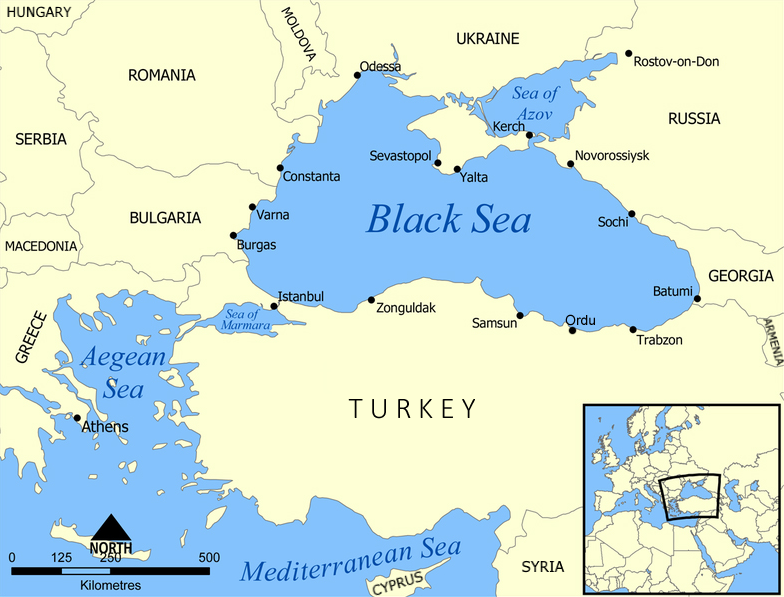
U.S. and Russian warships took up positions in the Black Sea today in a risky war of nerves on opposing sides of the Georgia conflict.

With the Russians effectively controlling Georgia’s main naval base of Poti, Moscow also dispatched the Moskva missile cruiser and two smaller craft on “peacekeeping” duties at the port of Sukhumi on the coast of Abkhazia, the breakaway region that the Kremlin recognised as independent yesterday.

The Americans, wary of escalating an already fraught situation, cancelled the scheduled docking in Poti of the U.S. Coast Guard vessel, the Dallas, and instead sent it to the southern Georgian-controlled port of Batumi, 200km (124 miles) from the Russian ships, where it delivered humanitarian aid.

“Let’s hope we don’t see any direct confrontation,” said Dmitri Peskov, the spokesman for the Russian prime minister, Vladimir Putin, as the Russians challenged the U.S. policy of using military aircraft and ships to deliver relief supplies. "The decision to deliver aid using Nato battleships is something that hardly can be explained," said Peskov. "It's not a common practice."

He said Russian naval forces were taking "some measures of precaution" around the Black Sea as the worsening dispute caused by Russia's recognition of Abkhazia and South Ossetia independence brought strong criticism from the key European countries most reluctant to sever relations with Russia.

The German chancellor, Angela Merkel, spoke to President Dmitri Medvedev today, the first western leader to talk to the Kremlin since Medvedev announced the recognition of the two secessionist regions of Georgia. She made it plain she had voiced her strong disapproval to the Russian leader. "I made clear above all that I would have expected that we would talk about these questions in [international] organisations before unilateral recognition happened," she said. "There are several UN Security Council resolutions in which the territorial integrity of Georgia was stressed, which Russia also worked on."

The French foreign minister, Bernard Kouchner, said Russia had broken international law and, along with other senior European officials, worried that Russia's decision to redraw Georgia's borders would encourage Moscow to act similarly with other former parts of the Soviet Union such as Ukraine. "We cannot accept these violations of international law ... of a territory by the army of a neighboring country," he said.

Germany and France, who opposed the U.S. and Britain in April in blocking Georgian negotiations to join Nato, have been the most reluctant to punish Russia for the Georgian conflict of the past three weeks and are desperate to try to revive the Russia-Georgia peace plan mediated by the French president, Nicolas Sarkozy, a fortnight ago.

Paris and Berlin agree the unilateral recognition of Abkhazia and South Ossetia by Russia left the peace plan ineffectual. A summit of EU leaders in Brussels on Monday is to ponder Europe's options.

With mounting warnings of western economic or trade sanctions against Russia, an EU official admitted that threats to block Russian membership of the World Trade Organisation (WTO) were meaningless. The push for Russian admission being driven not by Moscow but by western business interests keen to tap the large Russian market, he said.

Peskov warned that trade sanctions against Moscow would hurt the west as much as Russia. He admitted that South Ossetia, a mountainous region of 70,000 people, would struggle to establish itself as an independent state, but stressed that Russia's constitution made it possible for Russia to expand. "My country will extend the arm of cooperation and friendship to ease the transition period [for South Ossetia]," he said.

EU officials complained that Moscow was seeking to control the distribution of international relief. EU aid officials were demanding entry to the Russian controlled regions, but were being barred unless they handed over the aid to the Russian authorities for distribution.

May 27, 2009

German-French Alliance

500 German Troops to be Deployed in France

AFP
January 17, 2009

Germany wants to send 500 soldiers to France in what would be its first deployment to the country since the end of World War II in 1945, Der Spiegel magazine reports in an article to be published Monday.

According to the news weekly, Chancellor Angela Merkel told the German defence ministry last week to station the soldiers in the border town of Colmar.

The soldiers will cooperate with their French counterparts in a joint force known as the Franco-German Brigade.

French President Nicolas Sarkozy and Merkel were expected to give further details at the Munich Conference on Security Policy at the end of February, after an initial decision to keep the brigade running was announced in November.

Der Spiegel also reported that Sarkozy would post a French infantry unit to Donaueschingen, southwest Germany, while a regiment based in the nearby town of Immendingen would return to France.

The Franco-German Brigade was set up in 1989 by the then French President Francois Mitterrand and German chancellor Helmut Kohl to increase military cooperation between the two former enemies.

It includes some 5,000 soldiers -- 2,800 of which are German. Until now, they have been stationed only in southwest Germany.

A handful of German officers, however, are already based in Strasbourg, east France, directly engaged with the NATO mission Eurocorps.

However, no independent German military unit has been stationed in the country since the end of hostilities in World War II over 60 years ago.

Germany to Station Troops in France for First Time Since WWII

Spiegel Online
February 2, 2009

Germany to Station Troops in France for First Time Since WWII

Germany will station troops in France as part their joint crisis reaction force, Angela Merkel and Nicholas Sarkozy have said. In a joint opinion piece published ahead of the Munich Security Conference on Friday, the two leaders call for greater European and world cooperation on security.

The leaders of Germany and France urged greater European and trans-Atlantic unity on global security on Wednesday and underscored their call by announcing that German troops will be stationed in France as part of the joint Franco-German Brigade, a rapid reaction force.
"Anyone who knows our common history will be aware of the historical significance of this new step in the Franco-German friendship," German Chancellor Angela Merkel and French President Nicholas Sarkozy said in a joint opinion piece published on Wednesday in Germany's Süddeutsche Zeitung and France's Le Monde.
SPIEGEL reported last month that a German army battalion of 500 troops would be stationed in the town of Colmar in France's Alsace region. French media have reported Strasbourg, Metz or Bitche as possible locations.

It will be the first stationing of German troops in France since World War II. The Franco-German brigade was set up in 1989 and has around 5,000 troops that, until now, have been stationed at seven locations in Germany. It has served in Afghanistan and in the Balkans.

"Europeans Must Speak with One Voice"

Merkel and Sarkozy said international coordination on security policy was essential to tackle the Middle East conflict, the dispute over Iran's nuclear program, terrorist attacks in Afghanistan and Pakistan, as well as the international financial and economic crises.
"Security policy must be interpreted in a new and broader way," Merkel and Sarkozy said, adding that cooperation on military security needed to be complemented with a joint approach on the global financial architecture, energy supply and population migration.
They said it was essential that Europe and the US deepen their cooperation given the new risks they face in the 21st century.
"That means joint analysis, decision-taking and implementation. Unilateral steps would contradict the spirit of this partnership. But it also means that we Europeans must speak even more with one voice, which requires a strong measure of discipline from the member states," the leaders wrote.

"And we must further bundle and increase our capabilities, both civilian and military. The synergy between both is the trademark of European security policy," they added.
A Rocky Relationship

The statement is a show of unity between the French and German leaders who have had a rocky relationship over the last two years with disagreements on a range of issues including the financial crisis and French plans for a Mediterranean Union.

And despite repeated displays of harmony with warm embraces, smiles and kisses on the cheek for the cameras, there have been persistent reports that the two simply don't gel on a personal level.

Their joint statement comes ahead of the 45th Munich Security Conference which runs from Friday to Sunday, an important annual gathering of senior politicians, military top brass and security analysts.

US President Barack Obama is dispatching top members of his new administration to attend the conference including Vice President Joe Biden, National Security Adviser James Jones and Richard Holbrooke, Obama's point man for Pakistan and Afghanistan. US General David Petraeus, the head of US Central Command, is also attending. The conference will be closely watched for signs of a shift in US foreign policy under Obama.

Merkel and Sarkozy said Iran was openly speculating that the international community would stand by and let it proceed with its nuclear program.
"We will not permit an Iranian nuclear bomb because that would constitute a threat to world peace," they said. "And we are ready, in line with the expected involvement of the new American government, to stop the Iranian threat with increased dialogue but also -- if necessary -- with very determined sanctions."
2004 Poll: Over Half of France and Germany had Unfavorable View of Americans

May 26, 2009

Iran

Iran's Nuclear Program

The Associated Press
May 25, 2009

Mahmoud Ahmadinejad proposed on Monday a face-to-face debate with President Barack Obama at the United Nations if he is re-elected next month as Iran's president. But he balanced the offer with a sharp rebuke to Washington and its allies over Iran's nuclear program. He reiterated that Iran would never abandon its advances in uranium enrichment in exchange for offers of easing sanctions or other economic incentives.

The nuclear issue "is closed," he told a news conference.

Obama has urged a "serious process of engagement" after Iran's elections in an effort to end a nearly 30-year diplomatic chill. However, last week the American leader said the U.S. was prepared to seek deeper international sanctions against Tehran if it did not respond positively to the attempts to open negotiations on its nuclear program. Obama set a year-end deadline for Iran to show it wanted to engage with Washington.

The tough talk on nuclear negotiations following Iran's test last week of a long-range missile appear aimed at burnishing Ahmadinejad's hard-line credentials in the election campaign against another conservative and two pro-reform candidates.

His offer to debate Obama could also be campaign posturing before the June 12 vote. But it does put Ahmadinejad on record as supporting a potentially groundbreaking encounter following Obama's offer for dialogue.

Ahmadinejad said that, if re-elected, he would be open to "debate global issues as well as world peace and security" during the U.N. General Assembly in September.

There was no immediate reaction from Washington.

On the nuclear issue, Ahmadinejad ruled out talks with the U.S. He said Iran's stand is "crystal clear" and Tehran would only discuss the subject within the framework of the U.N. nuclear watchdog, the International Atomic Energy Agency.

Ahmadinejad has often denounced the West for trying to pressure Iran to give up it uranium enrichment program, a process that can produce fuel for both nuclear energy and nuclear weapons. Tehran insists it is only to fuel peaceful reactors, but the West worries could lead to nuclear weapons development...


May 18, 2009

The Six Issues That Divide Netanyahu from Obama

The Six Issues That Divide Netanyahu from Obama

By Tony Karon, Time
May 18, 2009

President Barack Obama welcomes Prime Minister Benjamin Netanyahu to the White House on Monday, at a moment when the White House and the Israeli leadership are undeniably at odds over the path to Middle East peace.

While the Obama Administration remains steadfastly committed to Israel's security, its ideas on how to achieve that security differ markedly from those of the hawkish Netanyahu government.

As Obama moves to revive the stalled Middle East peace process, Monday's meeting has been widely predicted to be a tense affair, but that may be overstating the drama. Netanyahu, like any Israeli Prime Minister, has an overwhelming incentive to get along with Israel's single most important ally; Obama, for his part, needs to fashion a peace process that produces results, for which he requires Netanyahu's cooperation. So Monday's encounter won't be a showdown as much as the opening exchange of a difficult conversation that could continue for months.

Herewith, a short guide to the issues that divide Obama and Netanyahu:

A Two-State Solution?

The idea of creating an independent Palestinian state alongside Israel on the territory it occupied in 1967 is the overwhelming international consensus, accepted even - according to opinion polls - by a majority of Israelis. The Obama Administration is not content to simply articulate that vision, as President George W. Bush did; instead, it seeks to move briskly toward realizing such a solution before the evolving facts on the ground make it untenable.

Netanyahu, however, has refused to endorse the principle of Palestinian statehood, insisting that sovereign independence for the Palestinians would endanger Israel's security. The Palestinians, Netanyahu has argued until now, will have to settle for a more limited form of self-government within borders still effectively controlled by Israel. Despite some speculation that he might make a rhetorical concession on the statehood issue on Monday, a top aide told the Israeli media Netanyahu would not do so - at least, not yet. (See pictures of Israel's recent war in Gaza.)

The Administration has made clear that it expects Israel to work toward a two-state solution. Netanyahu is expected to agree to talk to the Palestinians, to ease their circumstances and build their economy. But he maintains that trying to reach a final-status agreement right now is misguided and counterproductive, arguing that the priority is to build Palestinian administrative, security and economic capacity - and to tackle Iran, which he sees as a spoiler to any peace effort. (See pictures of Israel at 60.)

Next: What Gets Priority?

Iran First?

Netanyahu will argue that Washington's goals are best achieved if it gives priority to curbing Iran's nuclear and geopolitical ambitions before separating Israel from the Palestinians. He claims his Arab neighbors agree that reining in Iran is the region's priority, because it threatens their own stability. Given Tehran's support of Hamas, he'll say progress toward peace between Israel and the Palestinians is impossible until Iran has been pushed back. (See pictures of Jerusalem divided.)

Obama will agree that curbing Iran's regional influence and limiting its nuclear activities is an urgent priority. But the U.S. President won't buy Netanyahu's sequencing. Resolving the Israeli-Palestinian conflict remains a matter of urgency, Obama will argue, and he'll point out that the moderate Arab neighbors with whom the Israelis want to stand against Iran are also the ones most urgently insisting on the immediate implementation of a two-state solution with the Palestinians, whose unresolved plight strengthens radicals against moderates. Netanyahu will say no progress is possible on the Palestinian front until Iran is defanged; Obama will argue that rallying Arab support against Iran's ambitions requires resolving the Israeli-Palestinian conflict.

Next: The Timetable

What's the Hurry?

Netanyahu will argue that whether the outcome is two states or something less, this is not the moment to try to conclude the peace process. The Palestinians are hopelessly divided, with the moderate Palestinian Authority President Mahmoud Abbas lacking the political authority to deliver on any peace promises. Indeed, the PA President's term of office expired in January, and polls show he'd lose to Hamas in an election held now. Instead of final-status negotiations, Netanyahu will advocate building the Palestinians' administrative and security capacity, and promoting economic development, in enclaves currently under Abbas' control. Without this infrastructure of stability - and the neutralizing of Hamas - he'll argue, no progress is possible. (See pictures of Hamas-Fatah conflict.)

Obama will make clear that whatever stability has been created thus far in the West Bank is premised on the achievement of Palestinian statehood, and will collapse without rapid movement along that path. Politically, President Abbas' Fatah movement suffers from the fact that its moderation and almost two decades of negotiation has seen only an expansion of Israel's occupation of the West Bank. Fatah cannot remain committed to a peace process without end if it is to reverse its declining political fortunes among its own people. The same may be true for the U.S.-trained security forces that have helped subdue the West Bank. Hamas has proven to be an intractable reality of Palestinian political life, and Obama may argue that a workable peace process would require its consent. Most importantly, he'll note that time is running out for Abbas and the Arab regimes that have cooperated with Israel and have come away empty-handed in the eyes of their own people.

Next: The Settlements

Freeze the Settlements

Obama will tell Netanyahu that stability is undermined, potentially fatally, by Israel's continued expansion of its settlements in the West Bank, and by its moves to extend control over East Jerusalem, captured by Israel in the 1967 war but claimed by the Palestinians as their future capital. But Netanyahu's government includes strong settler representation, and while he'll unenthusiastically promise to dismantle outposts built in violation of Israeli law, he's unlikely to court a confrontation with the settlers unless there are substantial political rewards. He'll insist on maintaining the "natural growth" of Israel's settlements, and reiterate his view that sharing Jerusalem with the Palestinians is a nonstarter. (See pictures of Israeli settlers resisting eviction.)

Next: Gaza

Unfreeze Gaza

The Gaza war earlier this year forced the Israeli-Palestinian issue to the top of the Obama Administration's agenda, and although the fighting has ended, no formal cease-fire has been agreed, and the Israeli blockade - and Palestinian political infighting - has prevented any of the $4.5 billion pledged for reconstruction by international donors from actually reaching the territory. The potential remains high for a renewed outbreak of fighting, and Obama will press Netanyahu to ease Israel's blockade to allow in construction materials and normalize economic traffic. Netanyahu remains committed to overthrowing Hamas in Gaza, and he wants Obama to pursue the same course. And his government will insist on securing the release of captive soldier Gilad Shalit before easing up on Gaza.

Next: Dealing with Iran

How to Handle Iran

While supporting Obama's diplomatic efforts, Israel wants to see time limits imposed to prevent Iran playing for time while increasing its nuclear capabilities. Netanyahu has repeatedly warned that if diplomacy fails, Israel stands ready to bomb Iran's nuclear facilities. Obama agrees that negotiations with Iran should not be open-ended, but will allow a longer time frame than that preferred by the Israelis for diplomacy to succeed. Israel's leaders believe Iran will not back down and that negotiations are necessary primarily to win support for stronger sanctions or military action.

Israel has agreed to refrain from attacking Iran without first consulting the U.S. following reported warnings from the White House to avoid surprising Obama, whose military and security advisers have long argued that military strikes on Iran would cause more problems than they would solve. Once the diplomatic process with Tehran gets under way, the two sides may also disagree on where to draw the bottom line on uranium enrichment on Iranian soil.

May 15, 2009

The Battle Over the Temple Mount


Jordan: Israel Faces War If It Does Not Agree to Arab Terms

Israel National News
April 27, 2009

Israel faces all-out war within 18 months if it does not come to terms with the Arab world and allow the establishment of a new Palestinian state with its capital in Jerusalem, according to Jordan’s King Abdullah II.

The Hashemite monarch also declared on America’s Meet the Press television program Sunday that threats from Iran and Al Qaeda will fade away once Jerusalem is divided.

His position basically echoed the Palestinian Authority (PA) stand that its demands are a condition for peace and are not a matter for negotiation, despite diplomatic and media language about Israel and the PA each making concessions.

The king responded to virtually every question concerning the Middle East by pointing to Jerusalem.
“In Arab and Muslim minds, the most emotional aspect is the Palestinian cause and that of Jerusalem. And from there leads all the other problems,” he argued.
When program host David Gregory asked if it’s not a “fantasy’ to think that the problem of Al Qaeda will disappear so easily, the Jordanian monarch answered:
“What—what is Al Qaeda’s platform is—is the plight of the Palestinians in Jerusalem under occupation.”
Gregory challenged him that the terrorist organization may not believe what it says, but King Abdullah II was unmoved:
“You can’t really take them that seriously when the core issue, the major grievance in the Arab and Muslim world is solved,” he explained.
He followed the same track concerning Iran and “any crisis you want to talk about . . . All roads lead back to Jerusalem.”

The king, who visited U.S. President Barack Obama during his visit to the United States, was equally emphatic and simplistic concerning the Iranian nuclear threat, which worries the Arab world as well as Israel.

Asked by Gregory what is the best way for the U.S. to persuade Iran to retreat from its nuclear program, King Abdullah II responded:
“Solving the Israeli-Palestinian problem.” Gregory asked, “That’s it?” and the king explained, “That allows us to then solve the Israeli-Arab-Muslim problem.”

He continued, “Let me go back to saying I think that the challenge we have here in America is connecting the dots. If you have an issue of the threat that Iran poses to Israel, which is what Netanyahu was saying, the best way of solving that problem is solving the core issue, which is the Palestinian problem and that of Jerusalem.

“There’s more of an incentive for the Iranians to continue down that path when there’s an argument that they want to use in front of their people that Palestinians are under occupation.
The Jordanian monarch held out the chance for Israel to make peace with 57 countries that do not recognize Israel today:
“Look, Israel, if you solve the Palestinian problem, if you allow us to solve the problems of Jerusalem, we all want to have peace with you.”
He warned that if Israel does not deal with the Arab demands over Jerusalem within the next 18 months, “there will be another conflict between Israel and another protagonist.” He charged that outside interference, meaning the U.S., is a requirement to force a peace agreement.
“America is providing a new image of what and how things should be done. And I think that the world has a belief in the president, a lot of faith in what he has to say. Obviously the pressure on the president is to deliver,” he added.
So Israel has to decide, does it want to make a relationship with 57 nations or does it want to stay Fortress Israel?

May 8, 2009

Israel, the U.S. and the Arab World

Obama's Green Light to Attack Iran

By Caroline Glick , The Jerusalem Post
May 7, 2009

Arctic winds are blowing into Jerusalem from Washington these days. As Prime Minister Binyamin Netanyahu's May 18 visit to Washington fast approaches, the Obama administration is ratcheting up its anti-Israel rhetoric and working feverishly to force Israel into a corner.

Using the annual AIPAC conference as a backdrop, this week the Obama administration launched its harshest onslaught against Israel to date. It began with media reports that National Security Adviser James Jones told a European foreign minister that the US is planning to build an anti-Israel coalition with the Arabs and Europe to compel Israel to surrender Judea, Samaria and Jerusalem to the Palestinians.

According to Haaretz, Jones was quoted in a classified foreign ministry cable as having told his European interlocutor, "The new administration will convince Israel to compromise on the Palestinian question. We will not push Israel under the wheels of a bus, but we will be more forceful toward Israel than we have been under Bush."

He then explained that the US, the EU and the moderate Arab states must determine together what "a satisfactory endgame solution," will be.

As far as Jones is concerned, Israel should be left out of those discussions and simply presented with a fait accompli that it will be compelled to accept.

Events this week showed that Jones's statement was an accurate depiction of the administration's policy. First, quartet mediator Tony Blair announced that within six weeks the US, EU, UN and Russia will unveil a new framework for establishing a Palestinian state. Speaking with Palestinian reporters on Wednesday, Blair said that this new framework will be a serious initiative because it "is being worked on at the highest level in the American administration."

Moreover, this week we learned that the administration is trying to get the Arabs themselves to write the Quartet's new plan. The London-based Al-Quds al-Arabi pan-Arab newspaper reported Tuesday that acting on behalf of Obama, Jordanian King Abdullah urged the Arab League to update the so-called Arab peace plan from 2002. That plan, which calls for Israel to withdraw from Jerusalem, Judea, Samaria and the Golan Heights and accept millions of foreign Arabs as citizens as part of the so-called "right of return" in exchange for "natural" relations with the Arab world, has been rejected by successive Israeli governments as a diplomatic subterfuge whose goal is Israel's destruction.

By accepting millions of so-called "Palestinian refugees," Israel would effectively cease to be a Jewish state. By shrinking into the 1949 armistice lines, Israel would be unable to defend itself against foreign invasion. And since "natural relations" is a meaningless term both in international legal discourse and in diplomatic discourse, Israel would have committed national suicide for nothing.

To make the plan less objectionable to Israel, Abdullah reportedly called on his Arab brethren to strike references to the so-called "Arab refugees" from the plan and to agree to "normal" rather than "natural" relations with the Jewish state. According to the report, Egyptian President Hosni Mubarak was expected to present Obama with the changes to the plan during their meeting in Washington later this month. The revised plan was supposed to form the basis for the new Quartet plan that Blair referred to.

But the Arabs would have none of it. On Wednesday, both Arab League General Secretary Amr Moussa and Fatah leader Mahmoud Abbas announced that they oppose the initiative. On Thursday, Syria rejected making any changes in the document.

The administration couldn't care less. The Palestinians and Arabs are no more than bit players in its Middle East policy. As far as the Obama administration is concerned, Israel is the only obstacle to peace.

To make certain that Israel understands this central point, Vice President Joseph Biden used his appearance at the AIPAC conference to drive it home. As Biden made clear, the US doesn't respect or support Israel's right as a sovereign state to determine its own policies for securing its national interests. In Biden's words, "Israel has to work toward a two-state solution. You're not going to like my saying this, but not build more settlements, dismantle existing outposts and allow the Palestinians freedom of movement."

FOR ISRAEL, the main event of the week was supposed to be President Shimon Peres's meeting with Obama on Tuesday. Peres was tasked with calming the waters ahead of Netanyahu's visit. It was hoped that he could introduce a more collegial tone to US-Israel relations.

What Israel didn't count on was the humiliating reception Peres received from Obama. By barring all media from covering the event, Obama transformed what was supposed to be a friendly visit with a respected and friendly head of state into a back-door encounter with an unwanted guest, who was shooed in and shooed out of the White House without a sound.

The Obama White House's bald attempt to force Israel to take full blame for the Arab world's hostility toward it is not the only way that it is casting Israel as the scapegoat for the region's ills. In their bid to open direct diplomatic ties with Iran, Obama and his advisers are also blaming Israel for Iran's nuclear program. They are doing this both indirectly and directly.

As Obama's chief of staff Rahm Emmanuel made clear in his closed-door briefing to senior AIPAC officials this week, the administration is holding Israel indirectly responsible for Iran's nuclear program. It does this by claiming that Israel's refusal to cede its land to the Palestinians is making it impossible for the Arab world to support preventing Iran from acquiring nuclear weapons.

Somewhat inconveniently for the administration, the Arabs themselves are rejecting this premise. This week US Defense Secretary Robert Gates visited the Persian Gulf and Egypt to soothe Arab fears that the administration's desperate attempts to appease the mullahs will harm their security interests. He also sought to gain their support for the administration's plan to unveil a new peace plan aimed at isolating and pressuring Israel.

After meeting with Gates, Amr Moussa - who has distinguished himself as one of Israel's most trenchant critics - said categorically, "The question of Iran should be separate from the Arab-Israel conflict."

Just as the administration is unmoved by objective facts that expose as folly its single-minded devotion to the notion that Israel is responsible for the absence of peace in the Middle East, so the Arab rejection of its view that Israel is to blame for Iran's nuclear program has simply driven it to escalate its attacks on Israel. This week it opened a new campaign of blaming Israel directly - through its purported nuclear arsenal - for Iran's nuclear ambitions.

Speaking at a UN forum, US Assistant Secretary of State Rose Gottemoeller said, "Universal adherence to the [Nuclear Non-Proliferation Treaty] NPT itself, including by India, Israel, Pakistan and North Korea... remains a fundamental objective of the United States."

As Eli Lake from The Washington Times demonstrated convincingly, by speaking as she did, Gottemoeller effectively abrogated a 40-year-old US-Israeli understanding that the US would remain silent about Israel's nuclear program because it understood that it was defensive, not offensive in nature. In so doing, Gottemoeller legitimized Iran's claim that it cannot be expected to suspend its quest to acquire nuclear weapons as long as Israel possesses them. She also erased any distinction between nuclear weapons in the hands of US allies and democratic states and nuclear weapons in the hands of US enemies and terror states.

The Israeli media are largely framing the story of the US's growing and already unprecedented antagonism toward Israel as a diplomatic challenge for Netanyahu. To meet this challenge, it is argued that Netanyahu must come to Washington in 10 days' time with an attractive peace plan that will win over the White House. But this is a false interpretation of what is happening.

Even Ethan Bronner of the The New York Times pointed out this week that Obama's Middle East policy is not based on facts. If it were, the so-called "two state solution," which has failed repeatedly since 1993, would not be its centerpiece. Obama's Middle East policy is based on ideology, not reality. Consequently, it is immune to rational argument.

The fact that if Iran acquires nuclear weapons, all chance of peace between Israel and the Palestinians and Israel and the Arab world will disappear, is of no interest to Obama and his advisers. They do not care that the day after Hamas terror-master Khaled Mashaal told The New York Times that Hamas was suspending its attacks against Israel from Gaza, the Iranian-controlled terror regime took credit for several volleys of rockets shot against Israeli civilian targets from Gaza. The administration stills intends to give Gaza $900 million in US taxpayer funds, and it still demands that Israel give its land to a joint Fatah-Hamas government.

REGARDLESS OF the weight of Netanyahu's arguments, and irrespective of the reasonableness of whatever diplomatic initiative he presents to Obama, he can expect no sympathy or support from the White House.

As a consequence, the operational significance of the administration's anti-Israel positions is that Israel will not be well served by adopting a more accommodating posture toward the Palestinians and Iran. Indeed, perversely, what the Obama administration's treatment of Israel should be making clear to the Netanyahu government is that Israel should no longer take Washington's views into account as it makes its decisions about how to advance Israel's national security interests. This is particularly true with regard to Iran's nuclear weapons program.

Rationally speaking, the only way the Obama administration could reasonably expect to deter Israel from attacking Iran's nuclear installations would be if it could make the cost for Israel of attacking higher than the cost for Israel of not attacking. But what the behavior of the Obama administration is demonstrating is that there is no significant difference in the costs of the two options.

By blaming Israel for the absence of peace in the Middle East while ignoring the Palestinians' refusal to accept Israel's right to exist; by seeking to build an international coalition with Europe and the Arabs against Israel while glossing over the fact that at least the Arabs share Israel's concerns about Iran; by exposing Israel's nuclear arsenal and pressuring Israel to disarm while in the meantime courting the ayatollahs like an overeager bridegroom, the Obama administration is telling Israel that regardless of what it does, and what objective reality is, as far as the White House is concerned, Israel is to blame.

This, of course, doesn't mean that Netanyahu shouldn't make his case to Obama when they meet and to the American people during his US visit. What it does mean is that Netanyahu should have no expectation that Israeli goodwill can divert Obama from the course he has chosen. And again, this tells us two things: Israel's relations with the US during Obama's tenure in office will be unpleasant and difficult, and the damage that Israel will cause to that relationship by preventing Iran from acquiring the means to destroy it will be negligible.

April 26, 2009

Venezuela: Model for 21st Century Socialism

Venezuela: Model for 21st Century Socialism

In December 2007, a wide-ranging constitutional referendum to intensify Venezuela's move toward socialism and to enable Chávez to serve indefinitely as president was narrowly defeated. Chávez has clearly announced his intentions: to continue transforming Venezuela into a model for socialism in the 21st century. And unlike spurious accusations in the U.S. that an expansion in healthcare is a step away from democracy, a very real shift towards socialism is under way in Venezuela. Major elements of the country's economy are already under state control.

Home Page

“The Venezuelan oligarchy and multinational companies still have a firm grip over the mass media, private industry and the banking system. They use their ownership of these key levers in society in order to sabotage the will of the majority and plot another reactionary coup...” - Grant-Woods, “Venezuelan Revolution in Danger,” 2004

Venezuela's Chavez in Beijing at Start of Visits to China, Russia
Venezuela Purchases Weapons from Russia, China, Belarus, Spain, France and Iran
Chavez Defies U.S. By Dealing with Russia, China
Chavez Claims Alliance With Russia Will Protect Venezuela
Russia Offers Venezuela's Chavez Nuclear Help
Russian Bombers Arrive in Venezuela for Joint Maneuvers
Venezuela to Host Russia Navy Exercise in Caribbean
Venezuelan-Russian Military Nexus
The Cold War Over Oil Involves Venezuela, Russia and China
Chavez Celebrates China-launched Venezuelan Satellite
Raúl Castro's Visit with Chávez Shows Cuba's Need for Oil
Nicaragua's Ortega Turns to Russia and Venezuela for Replacement Cash
Russia Pushes an 'OPEC' for Natural-gas Nations
Chavez Wins Bid for Chance to Remain in Power Indefinitely
Venezuela Votes on Lifting Term Limits for Chavez

April 24, 2009

Iran-Russia-China-N.Korea-Venezuela-Cuba Alliance

An American Warning: China-Russia-Iran-N.Korea-Venezuela-Cuba

By Kim Myong-chol, An Amercian Warning
Originally Published on July 7, 2007

In light of the topic and the many aspects of this topic that I can talk about, I’m going to try and keep this to the point. After evaluating many different aspects of our “terrorist” problem… I thought I might share the fact that I think it’s going to get worse before it gets better.

THE NORTH KOREAN PROBLEM

Lately, you might have heard about North Korea’s sudden change of heart when it comes to shutting down their nuclear ambitions. They were so hard pressed to make sure this continued. And then out of nowhere, they decide to change their minds. First of all, I’m not buying it.

July 6, 2007, Reuters reported that North Korea has tested at least three short-range missiles over the past month, in what a U.S. expert has said were successful launches of an advanced weapon, adding to regional fears after it tested its first nuclear weapon last year. "In particular, North Korea's nuclear and ballistic missile problems are becoming even more serious," the Defense Ministry said in its first annual paper since being upgraded from an agency in January.

And the words “more serious” should be examined by everyone. Just because all of the sudden North Korea says they are going to shut down their nuclear facilities doesn’t mean that Jong Il still isn’t a crazy dictator. It only means that they have a back up plan for their problems. Its zig n’ zag. We think they “zig” when really it’s a “zag.” One of the oldest tricks in the book.

That being said… I think it might be the time to point out some of the words of North Korea. Kim Myong Chol ("Unofficial" spokesman of Kim Jong-Il and North Korea.) said that “war is coming to American soil.”

Some might ask why would Kim Jong-Il be so anxious for such a battle. Ever since the Korean War, North Korea has been extremely bitter with the United States for separating the north and the south. Kim Jong Il wants to bring together North and South Korea under the umbrella of a confederated state.

A North Korean newspaper stated the following in 2005:
“Unlike all the previous wars Korea fought, a next war will be better called the American War or the DPRK-US War because the main theater will be the continental US, with major cities transformed into towering infernos. The DPRK is now the fourth-most powerful nuclear weapons state just after the US, Russia, and China.”
When President George W. Bush agreed on the 2009 transfer of wartime operational control over South Korean forces to the South Korean president, Defense Secretary Donald Rumsfeld signaled the withdrawal of US troops with combat troops relocated from the front line to bases behind Seoul.

In North Korean words (same NK article):
“The title "the greatest iron-willed, brilliant commander" is reserved for Kim Jong-Il, who has led tiny North Korea to acquire the most coveted membership of the elite nuclear club, braving all the nuclear war threats, sanctions and isolation efforts on the part of the US. It is little short of a miracle that the leader has outmaneuvered and out powered the Bush administration against heavy odds.”

But the article continues: “Revealing are headlines of New York Times articles. One op-ed on February 9, 2005, by Nicholas Kristof, is headlined "Bush Bites His Tongue." The article says:
"There are two words the Bush administration doesn't want you to think about: North Korea. That's because the most dangerous failure of US policy these days is in North Korea. President Bush has been startlingly passive as North Korea has begun churning out nuclear weapons like hot cakes."
The fact is that the nuclear-armed North Korea is a major boon to China and Russia. Nuclear-armed, both Russia and China are friendless in case of war with the United States. The US has nuclear-armed allies, such as the UK, Israel and France. The Americans have a network of military bases around many countries, while both China and Russia have none with the exception of Iran, who will be ready in a matter of months.

The presence of a mighty nuclear weapons state in Korea should be most welcome to Russia and China. China has every reason to welcome a nuclear-armed North Korea, whatever it may say in public. The nuclear deterrence of North Korea is a major factor in reducing US military pressure on China on the question of the independence of Taiwan.

THE CHINA PROBLEM

"There are fears about the lack of transparency concerning China's military strength," a Japanese paper said, echoing similar sentiments expressed by its close regional security partner, Australia, in a paper published the previous day.
"In January this year China used ballistic missile technology to destroy one of its own satellites. There was insufficient explanation from China, sparking concern in Japan and other countries about safety in space as well as the security aspects," the paper said.
What’s important to note here is the roll that China plays and has been playing for sometime now. First of all, China could probably end the United States by the click of a button by simply letting go of all the American money they currently have. If they just let it go, it would probably bust our economic bubble in a matter of weeks. Many people who don’t believe that say “they need us too much.”

I would respond with “like hell they do.” China wants to be a world power. They pretty much are. They have an enormous population problem and, if I need to remind you, they are communists. They deal with the United States because we give them money. Furthermore, they are pretty much in bed with Russia, as established before. They buy so much of their military equipment from Russia… ships, bombs, subs, etc. In fact, they have similar designs in firearms; and I have a theory about that.
If you were a nation aligned with another… and you were eventually going to invade some other country together… wouldn’t it make sense to have almost identical weapons? I mean, if a soldier from one nation fell and a soldier from the other nation had to acquire his supplies… wouldn’t it make sense that the supplies would fit soldier two’s gear and equipment? Just a thought.
Furthermore, China isn’t exactly an ally of the United States. You might recall the fact that several times over the last 10 years, China has been buying military and intelligence secrets from double ops. In 2003, the Asia Times commented on the belief that China and the United States are in some sort of secret Cold War.

And as I stated earlier… Taiwan is an ally of the United States. US policy toward Taiwan is a serious concern for China. From Washington's standpoint, how to enable Taiwan to defend itself against growing Chinese military coercion remains a critical component of overall US strategy in East Asia. That strategy envisages strong alliance relationships, forward US military presence, and forestalling the rise of any major power that may challenge vital US interests. Within this broader context, the ability and resolve to help Taiwan defend itself not only fulfills key US obligations and commitments under the Taiwan Relations Act, but also demonstrates the resolve and credibility of the United States stance on China “acquiring” Taiwan back for its own.

THE RUSSIAN PROBLEM

Russia and United States have had a sketchy relationship for years. Russia only recently became a “democratic” nation and its current leader—President Putin—is a former KGB operative. KGB agents, just about the most communist outlaws to grace this planet. Personally, I don’t trust them; and in light of their extreme opposition to a European shield, and their gracious help in building nuclear facilities in Iran, the line is pretty clear where they fall concerning US interests. Additionally, it should also be noted that Russia has strong alliances with China, Venezuela and Cuba.

So now we have established a Russian/China/North Korean alliance of some sort. But we are forgetting a couple of heavy hitters here.

THE IRANIAN PROBLEM

Iran has been saying for some time now that they would love to see the end of the United States as well as Israel, a close ally to the US. Furthermore, Iran has stated that “soon the world will witness the destruction of the Zionist regime.”

These statements are hard to ignore considering the advancing programs of Iran’s nuclear ambitions that is only aided (if not started) by the Russians. But why would Russia help the Iranians… well I would answer for the same reason why China turns its head to North Koreas little endeavor. It will ease pressure off of them while they develop intercontinental ballistic missiles against treaties already set in place… but I digress.

Iran says that its nuclear program is for peaceful purposes. I personally find that hard to believe considering the fact that they undermine American forces everyday by training and supplying insurgents, and hold weekly rallies where the primary message is “Death to America” and “Death to Israel.”

Iran has stated that the war is coming and their nation is acting accordingly. Men, women and children are preparing for the US invasion. And so they should, because they only continue to advance their nuclear ambitions while the United States is doing everything it can to reduce the number of nuclear weapons around the world. Iran is a severe issue no matter which way you cut the butter. This is totally recognized if you listen to the words of their leaders that are defiant in the face of UN sanctions and things of the sort. I could go on about Iran for days…

But then the issue becomes the alliances with Iran. It’s obvious that Russia has their's, but what about those alliances that hit a little closer to home?

THE VENEZUELA PROBLEM

Chavez has campaigned energetically to raise Venezuela's profile and counter what he calls US hegemony. He has already visited Iran and Belarus, which are sharply at odds with the United States; and he has formed “Anti-American” pacts with Iran, saying that the two oil rich nations could destroy the United States. This is something to consider being that Venezuela has already made alliances with North Korea.

Venezuela and North Korea are seeking stronger diplomatic ties as they move ahead with a plan to open embassies in Caracas and Pyongyang, the vice president of North Korea's parliament said (according to the Associated Press). Deputy Foreign Minister William Izarra received Yang Hyong Sop in Caracas and discussed the possibility of energy cooperation between Venezuela, the world's fifth largest oil exporter, and North Korea. "Opening embassies in our countries will create the possibility of further strengthening our relations," said Hyong Sop, according to a statement released by Venezuela's foreign ministry.

Since taking office in 1999, Venezuelan President Hugo Chavez has reached out to establish ties with African and Asian countries while relations with the United States have grown tense. Chavez, a self-proclaimed "revolutionary" with close ties to Cuban leader Fidel Castro, says his government is establishing what he calls "21st-century Socialism" in this South American country.

So now we have established ties between Iran and Venezuela. Now we need to look at the next connection.

THE CUBA PROBLEM

Cuba is roughly 95 miles away from the United States. Cuba, being a very outspoken anti-American country, has strong ties with Venezuela. The main problem here is that Cuba could potentially be a staging point for ANY anti-American regime. Enough said.

THE TOTAL PICTURE

So let’s break this down.

  • North Korea is very anti-American and has ties with Venezuela, Iran, China and, by way of China, Russia.
  • Iran is backed and supported by North Korea and Venezuela, and gets its nuclear “help” from Russia. Additionally, Iran (through North Korea and Russia) would have support from China.
  • China and the United States are having more and more problems everyday.
  • Russia and United States are having more and more problems everyday.
  • Russia develops a new intercontinental ballistic missile against treaty (and in secret); then announces to the world that they have a missile that can defeat ANY shield; then states that they want to “re-negotiate” the treaty and that if we don’t want to come to the table, they are just going to walk away from the whole thing.
  • Then after Bush states that he wants to build a shield over Europe to protect our allies from Iran, Russia all of the sudden has a huge problem with it. Find that fishy?
  • It's obvious that the US and Iran don't get along, and that the US and North Korea don't get along, and anyone who pays attention to the news knows that the US doesn't get along with Cuba or Venezuela that well.
  • Let’s not forget the Cuban Missile Crisis, which was spawned from Russia during President Kennedy’s time in office. Once again, Cuba is very anti-American.
And all of these nations would benefit in full to see the United States fall from grace, because then they would be a world power and their influence would dominate the globe much as the United States has for the last 200 years or so.

So here is a scenario. Considering that the IAEA has stated that Iran is under a year away from nuclear power (atomic weapons) and considering the fact that the president of Iran has stated that the world will see the destruction of Israel very soon… I present the following…

Iran nukes Israel. The United States would in turn come down on Iran. Russia would in turn come down on the United States. The United States returns. China steps in to help Russia. Britain would have no choice at this point but to step in and help the United States. Venezuela would invade the US from the south because we will, at that point, be attacking all of their “friends” and using Cuba as a staging point, as well as Mexico (considering our border situation). North Korea will have already launched against Japan, South Korea and Australia, which would keep our allies in that part of the world pretty busy but would also split China’s resources, considering that they help their friends to their south.

From there it’s hard to say, as far as I’m concerned. If anything was left, it would pretty much be a free for all. The scary thing is, it doesn’t seem too hard to believe. The sad thing is that many Americans can’t see this threat and refuse to see it. They want to continue helping out the enemy by living in this “nothing can hurt us” world and trying to aide the enemy by crying about all of the “innocent” people who might die during war. I say “innocent” because I’m sure the majority of the “innocent” people are not all that innocent.

China, Russia, North Korea, Iran, Venezuela, Cuba, and many more… hate you for everything you stand for. It’s not just our president. It’s our flag, it’s our freedoms, it’s our values, and more.

The war with Iran is coming. THEY are making sure of it. I only pray that people can heed this American Warning and not be blind sighted when it goes down.

Anyway… I could go on and on… and probably will as soon as I write the outline. I just think it’s important to know that alliances have been made and our problems don’t rest in the hands of one nation. The picture is bigger than that.

Things to know:

Distance from Cuba to Florida – roughly 95 miles
Distance from Cuba and Venezuela – roughly 848 miles
Distance from Iran to Israel – roughly 988

2004—Iran – 350,000 active troops with 12,285,000 available
2005—Venezuela – 100,000 active troops with 4,907,947 available

Kim Myong-chol is author of a number of books and papers in Korean, Japanese and English on North Korea. He is executive director of the Center for Korean-American Peace. He has a PhD from the Democratic People's Republic of Korea's Academy of Social Sciences and is often called an "unofficial" spokesman of Kim Jong-il and North Korea.

April 23, 2009

Israel-U.S. Alliance


Muslim extremists shouted abuse at British soldiers during a home-coming march by the 2nd Battalion of the Royal Anglian Regiment in March 2009.

Washington Arrogance has Fomented a Muslim Revolution

By Paul Craig Roberts, Infowars
December 6, 2008

Is Pakistan responsible for the Mumbai attack in India? No.

Is India’s repression of its Muslim minority responsible? No.

Is the United States government responsible? Yes.

The attack on Mumbai required radicalized Muslims. Radicalized Muslims resulted from the US overthrowing the elected government in Iran and imposing the Shah; from the US stationing troops in Saudi Arabia; from the US invading and attempting to occupy Afghanistan and Iraq, bombing weddings, funerals, and children’s soccer games; from the US violating international and US law by torturing its Muslim victims; from the US enlisting Pakistan in its war against the Taliban; from the US violating Pakistan’s sovereignty by conducting military operations on Pakistani territory, killing Pakistani civilians; from the US government supporting a half century of Israeli ethnic cleansing of Palestinians from their lands, towns and villages; from the assault of American culture on Muslim values; from the US purchasing the government of Egypt to act as its puppet; from US arrogance that America is the supreme arbiter of morality.

As Justice Brandeis said, crime is contagious. Government teaches by example, and America’s example is lawlessness. America’s brutal crimes against the Muslim world have invited every Muslim to become a law unto himself—a revolutionary. It is not terror that Washington confronts but revolution.

By illegal, uncivilized and undiplomatic behavior, the US has stirred Muslim peoples from their long slumber as serfs of Western colonial powers. Some Muslims have had all that they can take, and their fury drives them to rouse a billion of their fellows to throw off the yoke of foreign hegemony.

The arrogant incompetence of American governments brought this conflict to the American people and inflicted it upon the world. By destabilizing Pakistan, the US lost a puppet and created an opportunity for Muslim revolutionaries to exploit. By enraging India against Pakistan, the Mumbai attack has created new problems for Pakistan that will focus that government’s attention away from combating Taliban sanctuaries on Pakistan’s border with Afghanistan. If the US picks up the slack, it will have invaded yet another country and become trapped in a larger quagmire.

Having fomented terrorism, the American government now pretends to be the innocent victim, just as Israelis, having brought about terrorism by driving Palestinians from their homes and villages, pretend to be innocent victims.

Today European members of NATO, an outdated organization formed to defend Western Europe against Soviet invasion, are sacrificing the lives of their soldiers fighting the American Empire’s war in Afghanistan. If America continues to have its way, Europeans will soon be dying in Ukraine, Georgia, and Iran.

The American government, which preaches “freedom and democracy,” has in the 21st century gone to great extremes to stamp out the US Constitution and the civil liberties that it guarantees. The US government has repudiated the Geneva Conventions and the prohibitions in US statutory law against torture. The US government has set aside habeas corpus, the ancient legal principle guaranteed by the US Constitution that prohibits governments from holding people in prisons without presenting charges. The US government has broken the laws of other nations by kidnapping foreign citizens and transporting them to other lands to be tortured.

These massive crimes have been justified in the name of the “war on terror.” In truth, America’s crimes foment revolution.

It was the US government that created the “war on terror,” which has been used to murder, which disposses millions of Iraqis and Afghans to imprison US citizens as if they were medieval serfs, and which squanders three trillion dollars for the sole purpose of enriching Halliburton and the military-security complex.

Investigative journalist John Pilger has shown that the so-called “moral superiority of the West” is a hoax designed to shield from view the self-seeking West’s crimes against humanity.

Obama promised change from this destructive behavior, but how does change arise when the most arrogant woman on earth is appointed Secretary of State, and the rest of the new government is staffed with tried and true Likudniks and servants of the military-security complex?

The change over which Obama will preside will have no American victories. The change will come from America as a failed state, from the dollar dethroned as reserve currency, from America repudiated by its allies and paid puppets, from massive unemployment for which there is no solution, from hyperinflation that produces anarchy.

The day might arrive when Washington is faced with revolution at home as well as abroad.

Paul Craig Roberts was Assistant Secretary of the Treasury in the Reagan administration. He is coauthor of The Tyranny of Good Intentions. He can be reached at: PaulCraigRoberts@yahoo.com


Bin Laden Urges Jihad - (Reuters) In a recording aired by Al Jazeera television, Al Qaeda leader Osama bin Laden accused moderate Arab leaders of plotting with the West against Muslims and urged his followers to prepare for jihad (holy war). "It is clear that some Arab leaders have plotted with the Zionist-crusader coalition against our (Muslim) people, these (Arab countries) the United States calls the moderate states," bin Laden said, without naming any of the leaders. "We must seriously work and prepare for jihad to enforce the right and abolish the wrong," bin Laden said in the audio recording that was aired on Saturday. Bin Laden, who made a similar call for jihad on January 14, described Israel’s offensive in Gaza and its attacks on the Palestinian territory as a "holocaust" and said militants wanting to help Gazans should support Iraqis fighting U.S.-led forces and Baghdad’s government.

Ron Paul: We Killed a Million Iraqis
Report: 5 Guantanamo Detainees Say They Planned September 11
Five Guantanamo Detainees Proud to have Planned 9/11
Israel's American Chattel
Thousands of Iraqis Rally Against U.S.
British Muslims Help Taliban With IEDs
Britain to Muslims: Please Don’t Hate Us!
Top Judge: Sharia 'Could Have Role In UK'
UK Muslims Want to Ban Rightwing Sites
1st UK Muslim MP Quits After Muslim Threats
One Man Behind Pope, Mohammad Protests
13% of UK Muslims Call 7/7 Bombers "Martyrs"
Are Muslim Radicals Trying to Provoke a Civil War in Britain?
Muslim Protest at Luton Army Parade was 'Upsetting', Says Senior Officer
Stop Pandering to Enemies of Our Way of Life
Brit Police State Characterizes Muslim Protesters as al-Qaeda IED Terrorists

April 22, 2009

Satan's Zionist Movement: Antithesis of World Peace


Elie Wiesel explained to Charlie Rose that Obama invited him to join the Presidential tour of Buchenwald in Germany; and that he was not scheduled to speak on June 5, 2009, but, at the last minute, Obama asked him to be the final speaker (Wiesel's impromptu speech in the video above).

A Synopsis of Zionism and the Israel/Palestine Conflict

Historic PalestineFor thousands of years there was no conflict in Palestine. In the 19th century, the land of Palestine was inhabited by a multicultural population of Palestinian Arabs—approximately 86 percent Muslim, 10 percent Christian, and 4 percent Jewish. For centuries these groups lived in harmony.

In the late 1800s, a group in Europe decided to colonize this land. Known as "Zionists," this group consisted of an extremist minority of the Jewish population (and some non Jews) who wanted to create a Jewish homeland. They considered locations in Africa and the Americas before settling on Palestine, where the Jewish State of Israel was established in 1948.

Largely due to one-sided special-interest lobbying by AIPAC, the U.S. has given more funds to Israel than to any other nation: $85 billion in grants, loans and commodities since 1949, with an additional $50 billion in interest costs for advance payments, for a total cost of $135 billion or $23,240 per Israeli. During fiscal year 2007, the U.S. gave an average of $7 million per day to the State of Israel.

Albert PikeAlbert Pike, 33° Mason, "Three World Wars"
"The Third World War must be fomented by taking advantage of the differences caused by the 'agentur' of the 'Illuminati' between the political Zionists and the leaders of Islamic World. The war must be conducted in such a way that Islam (the Moslem Arabic World) and political Zionism (the State of Israel) mutually destroy each other." - Pike's 1871 Letter to Giuseppe Mazzini

Zionism can be defined as a political movement among an extremist minority of the Jewish population (although supported by some non-Jews) which maintains that the Jewish people constitute a nation and are entitled to a national homeland. Formally founded in 1897, Zionism embraced a variety of opinions in its early years on where that homeland might be established. From 1917 it focused on the establishment of a Jewish national homeland or state in Palestine, the location of the ancient Kingdom of Israel.


Why We Should Be Concerned About Christian Zionism

Christians are troubled when injustice is committed. We are especially troubled when it is perpetuated through the appropriation of Christian theology for ideological purposes. One such misappropriation is commonly referred to as Christian Zionism.

Christian Zionism may be defined either broadly or narrowly. Broadly speaking, it designates any Christian support for the national revival movement of the Jewish people realized through the establishment of the modern State of Israel (historically known as Zionism). More narrowly defined, Christian Zionism is an ideology grounded in beliefs which considers the State of Israel to be divinely ordained and scripturally determined with a central role in ushering in the end of history, where unconverted Jews and unbelievers (including Christians who are considered to be of questionable status) are judged by God’s wrath. It is the narrower form that causes immediate concern.

There are a number of reasons why this narrow ideological form of Christian Zionism raises concerns for the member communions of the National Council of the Churches of Christ in the USA. Among these are the following:
  • It is a movement with negative consequences for Middle East peace

    Christian Zionism, in its narrow ideological form, encourages political advocacy committed to preserving control over all of historic Palestine for Jewish people alone, including the West Bank and Gaza strip, to ensure the realization of the movement’s own end-times hopes. This ideological approach rejects any peace process built on a negotiated settlement towards a two-state solution to the conflict. Leading advocates of this ideology have formed themselves into oftentimes very public and well-funded political action groups whose aim is to prevent any negotiations that may lead to a two-state solution to the conflict.
  • It fosters fear and hatred of Muslims and non-western Christians

    Prominent spokespersons for Christian Zionism are known for promoting negative stereotypes of Muslims and Middle Easterners, including Middle Eastern Christians. They often accuse these Christians of siding with Muslims against the U.S. and the State of Israel in a cosmic battle of good and evil, thus questioning their Christian faithfulness. Rather than fostering understanding and cooperation with neighbors, ideological Christian Zionism often teaches Christians in the U.S. to harbor suspicion and enmity towards Muslims and non-westernized Christians. When it does so, the movement negates Christ’s command to love our neighbors as ourselves (Matthew 22:39).
  • It can lead to the dehumanization of Israelis and Palestinians

    Because Christian Zionism bases support for the State of Israel on its supposed role in the end of history, its adherents tend to treat Israelis and Palestinians not as neighbors to be loved, but as pawns in a cosmic drama of divine vengeance and retribution. The conclusion of this drama involves the death of all non-Christians, including Jews, through apocalyptic warfare or divine judgment. Given these beliefs, even many Jews wonder if the movement promotes proper Jewish-Christian relationships and question the nature of the movement’s support for Israel.
  • It is not based on traditional teaching or doctrines of the Church

    Christian Zionism and its theological presuppositions are nineteenth-century innovations in Christian doctrine. The most prominent spokesperson for these beliefs was John Nelson Darby (1800-1882). Although the advocates of Christian Zionism and its underlying theology sometimes claim to base their beliefs on ancient understandings, generally scholars recognize these to be recent innovations.
  • Evangelical Christians are concerned

    Ideological Christian Zionists sometimes claim that they speak on behalf of all American evangelicals. This is not so. Many evangelicals in the U.S. do not want to be identified as ideological Christian Zionists. Several prominent evangelical spokespersons have spoken out strongly against this ideology, recognizing how it contradicts the central commitments of Christianity to justice and peace-making. Many question its theological assumptions.
Christians in the West must ask themselves questions about the influence of Christian Zionism in U.S. public opinion. It grieves the member communions of the National Council of the Churches of Christ in the USA to note that many Christians visiting the land of Jesus’ birth, death, and resurrection are not even aware of the existence of Arab Christians, and do not have opportunities to interact with local Christian communities. One step toward addressing this concern is for Christians in the West to become better aware of Christian Zionism and its effects, including the history, theology, and forms of biblical interpretation underlying this ideology. Please take the time to learn what this movement is all about, get involved, and continue to “pray for the peace of Jerusalem” (Psalm 122:6).


Jews Against Zionism

"Although there are those who refuse to accept the teachings of our rabbis and will continue to support the Zionist state, there are also many who are totally unaware of the history of Zionism and its contradiction to the beliefs of Torah-True Jews. From its inception, many rabbis warned of the potential dangers of Zionism and openly declared that all Jews loyal to God should stay away from it like one would from fire. They made their opinions clear to their congregants and to the general public. Their message was that Zionism is a chauvinistic racist phenomenon which has absolutely naught to do with Judaism. They publicly expressed that Zionism would definitely be detrimental to the well being of Jews and Gentiles and that its effects on the Jewish religion would be nothing other than destructive. Further, it would taint the reputation of Jewry as a whole and would cause utter confusion in the Jewish and non-Jewish communities. Judaism is a religion. Judaism is not a race or a nationality. That was and still remains the consensus amongst the rabbis."

"We were given the Holy Land by God in order to be able to study and practice the Torah without disturbance and to attain levels of holiness difficult to attain outside of the Holy Land. We abused the privilege and we were expelled. That is exactly what all Jews say in their prayers on every Jewish festival, 'Umipnay chatoenu golinu mayartsaynu'—'Because of our sins, we were expelled from our land.'"

"We have been forsworn by God 'not to enter the Holy Land as a body before the predestined time;' 'not to rebel against the nations;' to be loyal citizens, not to do anything against the will of any nation or its honour; not to seek vengeance, discord, restitution or compensation; 'not to leave exile ahead of time.' On the contrary, we have to be humble and accept the yoke of exile. To violate the oaths would result in 'your flesh will be made prey as the deer and the antelope in the forest,' and the redemption will be delayed."

Iran-Venezuela-Cuba Alliance

What Awaits the Cuba-Venezuela Alliance?

By Mariefli Perez-Stable, McClatchy Newspapers
April 10, 2009

Cuba and Venezuela have often crossed paths. In the early 1960s, Havana abetted armed groups against democratically elected Venezuelan governments. Meddling in Venezuela's affairs, in part, determined Cuba's 1962 suspension from the Organization of American States. Caracas and Havana stood at irreconcilable odds afterward.

By the early 1970s, Cuba's foreign policy made a U-turn. With the failure of guerrillas, Havana largely embraced diplomacy. It was a fortuitous pivot that led Cuba down the path of a world-class foreign policy.

Under Rafael Caldera (1969-1974), Venezuela also changed. Left-wing parties, which had supported Havana's meddling, were legalized. Caldera likewise opened a dialogue with the English-speaking Caribbean that had looked askance at Caracas's hostility toward Havana.

In 1975, Carlos Andres Perez (1974-1979) normalized relations with Cuba. Embassies were opened and trade resumed. Thanks to a Caracas-Moscow agreement, Cuba imported Venezuelan oil while the former Soviet Union supplied Caracas' clients in Europe. Though subsequent presidents strayed from Perez's track, Venezuela never restored a policy of confrontation.

As president again from 1989-93, Perez again improved relations with Cuba. In 1992, little-known colonel Hugo Chavez staged a failed coup against Perez that landed him in jail. Havana quickly congratulated Perez in surviving the coup. When freed in '94, however, Chavez traveled to Havana where Fidel Castro gave him a hero's welcome.

Carlos A. Romero, a professor at Venezuela's Universidad Central, wrote a handy overview of Cuba-Venezuela relations in the last 50 years. Chavez's election was a godsend for Cuba, which at last had a true ally in the Western Hemisphere. Romero analyzes Venezuelan-Cuban ties in two stages: between 1999 and 2004 when the bilateral relationship consolidated and since 2004 when the two countries crafted a regional strategy.

Their decade-long closeness has been mutually beneficial. Since 2005, Venezuela sends Cuba a daily lifeline of 100,000 barrels of oil at subsidized prices. Bilateral trade grew from $388 million in 1998 to $7.1 billion in 2007. Havana in 2007 provided Caracas with the services of 39,000 Cubans, including 31,000 health professionals. The remaining 8,000 presumably include political and security advisors instrumental in Chavez's blueprint for gutting democracy from within. Appearances to the contrary, Venezuela is also dependent on Cuba.

Founded in 2004, ALBA—the Bolivarian Alternative for the People of Our America - is the cornerstone of the joint regional strategy to counter free-trade agreements with the United States. Venezuela, Cuba, Nicaragua, Bolivia, Dominica and, most recently, Honduras have joined ALBA. Still, Nicaragua and Honduras are members of the CAFTA-DR, the Central America-Dominican Republic-United States FTA. In 2007, Chavez added the need for a regional security strategy built on:

-Excluding the United States from any regional defense council

-Diversifying military purchases and technical assistance

-Forging closer ties with China, Russia, Iran and other U.S. rivals.

There might be a lot less than meets the eye in this strategy. In a recent visit to China, Chavez ranted about U.S. imperialism, which Beijing promptly disowned. Russia is readily seeking a renewed military presence in the region, which Cuba hasn't embraced.

If Iran responds to the Obama administration's offer to dialogue, Venezuela may be left with a short-stick strategy.

What awaits the decade-old alliance between Cuba and Venezuela?

-One scenario points the relationship continuing on its present terms. Yet, oil prices are cutting into Venezuela's largess in the region, even if Cuba might be the last tosuffer.

-A second scenario entails a certain distance between the two countries if Cuba under Raul Castro opens the economy and eases tensions with the United States. Rumors abound about the Cuban Armed Forces mistrust of their Venezuelan colleagues.

-Changed domestic circumstances in Cuba or Venezuela is a third scenario. While Havana and Caracas can't fathom a future without revolution, history is often like an old mole who surfaces unannounced, for good or ill. I'm glad; otherwise, writing columns would be boring.

Marifeli Perez-Stable is vice president for democratic governance at the Inter-American Dialogue in Washington, a professor at Florida International University and a columnist for the Miami Herald.

Back to The Lamb Slain Home Page